Local history
It was under the Enclosure Act of 1801 that the northern area of the Pemberton Estate up to the Vicar's Brook and to the west of Trumpington Road, while remaining the property of Francis Pemberton, was divided into separate allotments -- these allotments underlie the development of the area when houses began to be built.
From 1878 onwards, the Pemberton family began to sell off allotments of land with 99-year leases and covenants to ensure that houses were built to the best standards and with well-designed and laid out gardens.
Founding of Chaucer and Latham Road
From the late 1870s many colleges began to allow dons to marry and the demand increased for building plots.
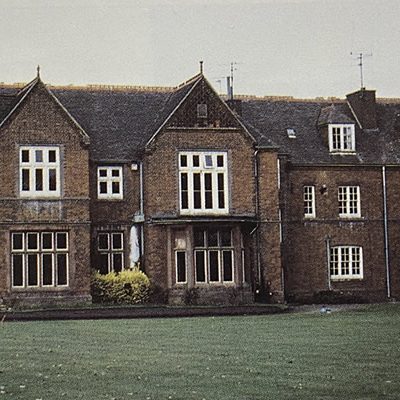
The first of these plots went to the Revd Henry Latham, who in 1880 built Southacre and gave his name to the road.
Coins and artefacts found in the vicinity show occupation of this historic area as far back as the first century A.D.
The area was included in the purchase of the parish of Trumpington on 1st April 1675 by Sir Francis Pemberton.
The famous milestone seen on the cover of Rus in Urbe, a history of the two roads published by SOLACHRA in 1996, was erected beside Trumpington Road bridge over Vicar’s Brook in 1728, as part of a bequest from Dr William Mowse, Master of Trinity Hall.
Each Cambridge milestone is measured from the S.W. buttress of Great St Mary's Church in the centre of the city. The Vicar’s Brook milestone reads, "1 mile to Great Saint Mairies Church Cambridge A.D.1728", and features the arms of Trinity Hall impaling those of Mowse.
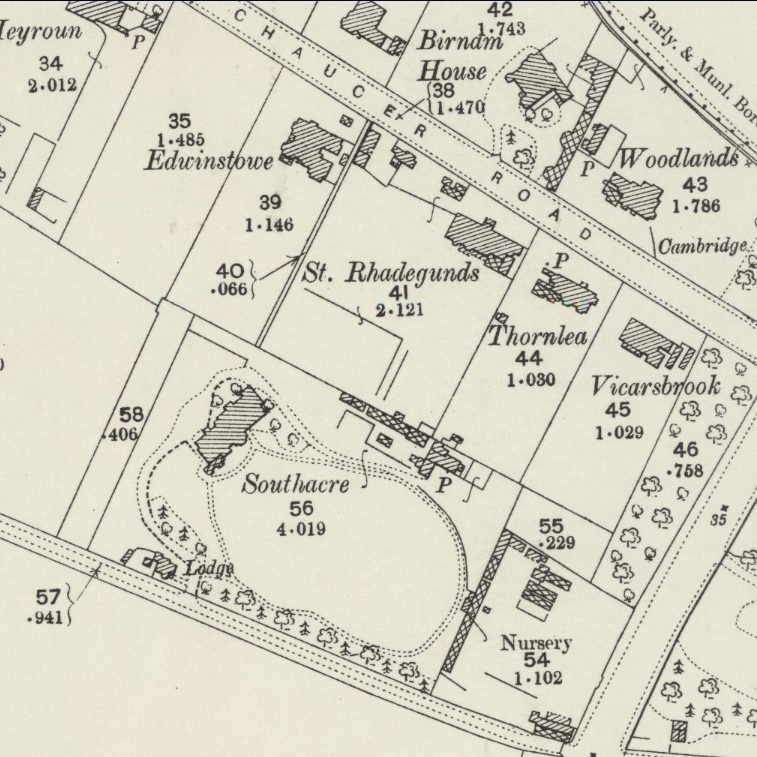
By 1886 Nos 1, 2, 3, 5 & 6 Chaucer Road had been built with the remaining plots leased or rented for agricultural purposes.
Plots in Chaucer and Latham Road saw the development of more substantial houses during the period of 1891-- 1940 until halted by the Second World War.
From 1940 through to 1988 plots were acquired and developed by the University of Cambridge, including the demolition of Nos 1 and 3 Chaucer Road.
During 1989 the area saw an unprecedented level of development, with building and redevelopment continuing through to today.
Founding of SOLACHRA
When the University showed the rabbit of the building sites at 1 (Vicar’s Brook) - 3 (Southacre) Chaucer Road, it paved the way for developers to show interest in the land, with King Street Housing Association in 1979 being the first.
The City threw out their planned development of flats but the controversy that had begun continued for a further nine years, paving the way for a residents' permanent committee; the Southacre, Latham and Chaucer Residents Association was formed, the name SOLACHRA in 1985.
Founding members included William Elliot (Chairman until 1990), John Rose Keith Haarhof, Donald Denman and Ian Gaseltine who still serves today. Born out of necessity, it is a way for residents to have a unified voice, whether speaking with the City Planning Authority, the Transport Department of the County Council, the University, the Government or competing builders.
The history detailed here is taken from Lady Renfrew's book Rus in Urbe and used with her kind permission. Please contact us if you would like to purchase a copy of the book.